 |
| Click for gallery. |
Friday, May 2, 2014
Hunger and Homelessness PSAs

Tuesday, April 29, 2014
Two Sendik's Bags
Each year, sixth grade students partner with the Hope House of Milwaukee for their service project, "Food for the Hungry." Using their own money, they purchase food to be donated to the organization. In addition to creating grocery lists, clipping coupons, and shopping at the Mequon Piggly Wiggly, students also receive content-related instruction in their classes. Lessons could include a unit on nutrition in science, the history of food in social studies, or the mathematics of poverty. In English, students were asked to focus on a statement made by Ken Schmidt, director of Hope House of Milwaukee. Mr. Schmidt helped us to kick-off the project by visiting on April 3 and discussed with the kids the organization and its mission. While here, he stated that many clients of Hope House carry all of their belongings in two plastic grocery bags. That statement resonated with me, and I was inspired to create a reflective activity.
In class, students brainstormed lists of their most prized possessions. They focused on items that were irreplaceable or held great sentimental value. Then, I showed them two Sendik's grocery bags and reminded them of what Mr. Schmidt had said during his visit. For homework, students were to pack what they could into two Sendik's plastic bags (or the like). I emphasized that they needed to think and choose carefully, as they would have to leave everything else behind. It was important for them to imagine that this would be a permanent decision; they could never go back. Students used the following guidelines when they were packing their bags:
 |
| Click for Photo Gallery |
- What holds the most meaning for you?
- What can be easily transported with minimal effort?
- What is a necessity (meaning you need it)?
- What can you live without?
- No animals!
Students began to feel empathy for those whose situations required these difficult decisions. Here's what they said:
"We are used to so having much stuff that we can’t imagine living in two small plastic bags."
-Julian
"I now know how it feels to have your whole life just in two bags."
-Hadi
"I learned that doing this activity was not only hard, but frustrating, so I cannot imagine what it would be like having to do this for real."
-Aidanne
"I learned that being homeless is a very tough challenge, and I want to help the cause."
-Shailesh
"...I can’t believe that many people have to go through this."
-Shreya
"If you think about it, we didn’t have to worry to much about what we brought, but real people are faced with these choices. Do I bring my water bottle and food, or do I bring my photo book filled with memories? What would you choose?"
-Eleanor
Tuesday, April 15, 2014
5 Good Reasons to Take Your Kids to the Library Today | Christine French Cully
Check out this great article by the Huffington Post on why kids need to go to the library. My family and I make regular trips to our small, neighborhood, storefront library and are never let down. From the latest titles, to movies and music, we always walk away with our arms loaded. If you haven't had a chance to explore your neighborhood library lately, take your kids this weekend, or even today! It's a great place to explore, read, and learn responsibility. Plus, it's free!

Click to read the article: 5 Good Reasons to Take Your Kids to the Library Today
Wednesday, March 19, 2014
Writing Across the Divide
Shortly before Spring Break, the second grade team reached out to the middle school teachers in search of pen pals. How could I not respond? Seventh and eight grade language arts classes paired with Mrs. Edwards and Mr. Engroff, and I partnered with Mrs. Feldner. We planned a series of three transactions as well as a culminating celebration in which the pen pals could meet one another. I didn’t have to sell the opportunity to my students. Even though there would be no grade or extra credit, I had over 30 volunteers who were interested in writing for the sheer enjoyment of it. Due to Mrs. Feldner having 17 students, it was necessary to randomly choose the pals.

About a week before break, my students received their first letters. Meticulously written in cursive, some of my writers were a little intimidated. One boy even asked if he would have to respond in cursive. There was more than a hint of fear in his voice. After outlining the expectations of the project, the sixth grade volunteers drafted a response, reviewed it with a peer, and submitted it to me for final approval. Letters were dropped in the mail the week before break – I’m sure the second graders were anxious to hear back. My students can’t wait for the next correspondence to arrive in the mail!
I am thrilled with the chance to work across the divisions. It brings students closer together and creates meaningful connections between colleagues. From an English teacher’s standpoint, it provides an opportunity for students to write for a real and relevant audience. I observed students working thoughtfully and carefully. It is my hope that Mrs. Feldner and I have started a tradition – one that will last for many years to come.
photo credit: 臺中市頭家國民小學 Tuojia Elementary Scho via photopin cc
I am thrilled with the chance to work across the divisions. It brings students closer together and creates meaningful connections between colleagues. From an English teacher’s standpoint, it provides an opportunity for students to write for a real and relevant audience. I observed students working thoughtfully and carefully. It is my hope that Mrs. Feldner and I have started a tradition – one that will last for many years to come.
Saturday, February 22, 2014
Infographics and the Water Crisis
 |
| Table Etiquette Infographic |
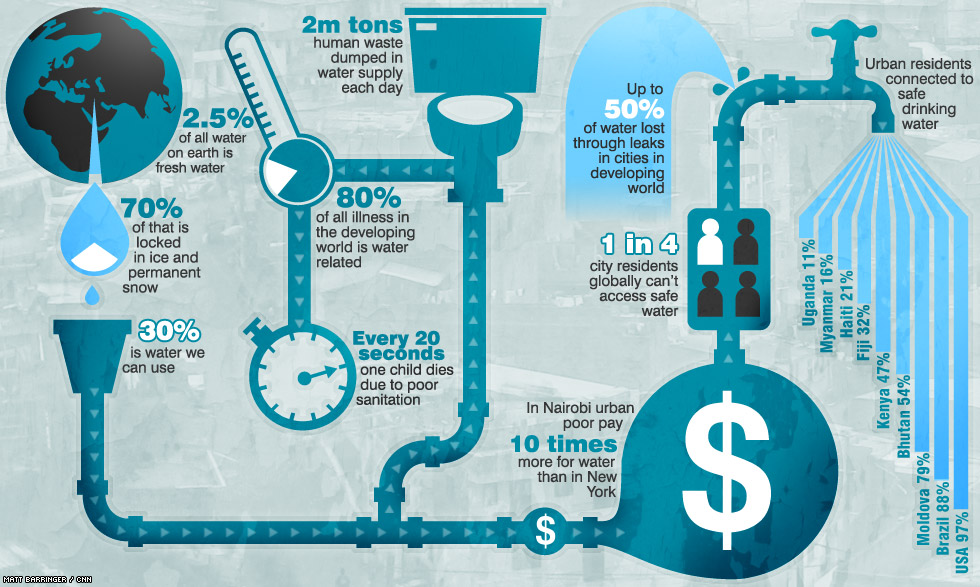
For about a year now, I have been enamored with the infographic. I absolutely love these visual displays of information. If you aren't familiar with the infographic, have a little fun today - Google the term and see what you find. Then, Google it with the name of a topic, like 'shark' and 'infographic'. I guarantee you will will find yourself lost in a visual feast of engaging facts, many of which you should know, and many that are unnecessary, yet fun. One of the many things I like about the infographic is its ability to condense what would be large amounts of text into reasonable chunks of words and illustrations. It makes learning fun!
 |
| The Secret Life of Drinking Water |
While designing our persuasive writing unit, I kept this in mind. One of my goals was to get students engaged deeply in a topic that they hadn't necessarily given significant thought to before. Since infographics about table etiquette and the snowy owl captivated me every time, I figured it might work with the kids. For this particular exercise, I chose water; something we regularly take for granted. I shared four different infographics that I wanted them to consider: How Much Water is Your Home Wasting?, The Miracle of Water, The Secret Life of Water, and Why Water Matters. The kids were given a graphic organizer to pull out the main details of each, as well as to help them write summaries. In partners, they analyzed, made judgements, and compiled the information. Not surprisingly, like me, they were astounded by what they learned. Did you know that every 20 seconds a child dies from a water-related sickness?1
The next step will be for the students to create a persuasive paragraph based on what they have learned. I suspect that many will write impassioned pleas to change the world. That's great! While not everyone may have a realistic solution, they will still be practicing the art of argument. In the future, I may even have them create their own infographics. There are many great, free resources out there and the possibilities would be endless!
1http://hydratinghumanity.org/why-water.php
Subscribe to:
Posts (Atom)